Modern data centers and server rooms are the backbone of every business. Whether it’s cloud storage, online transactions, or enterprise software — these facilities hold valuable digital assets that must be protected from every possible risk.
And one of the most critical yet often overlooked risks is fire.
Even a small spark from an overheated cable, UPS failure, or short circuit can lead to a disaster, causing costly downtime, data loss, and infrastructure damage. This is where fire suppression systems come in — ensuring that fires are detected, contained, and extinguished before they cause harm.
Understanding Fire Risks in Data Centers

Data centers and server rooms are unique environments. Unlike traditional offices, they operate 24/7 and house sensitive electronic equipment that cannot be exposed to water or corrosive agents.
Common causes of fire in these areas include:
- Overloaded electrical circuits and cables
- Overheating of servers or UPS systems
- Static electricity or dust accumulation
- Faulty cooling or power backup equipment
These risks make it essential to have specialized, clean-agent fire suppression systems designed specifically for IT and electronic environments.
Types of Fire Suppression Systems for Data Centers
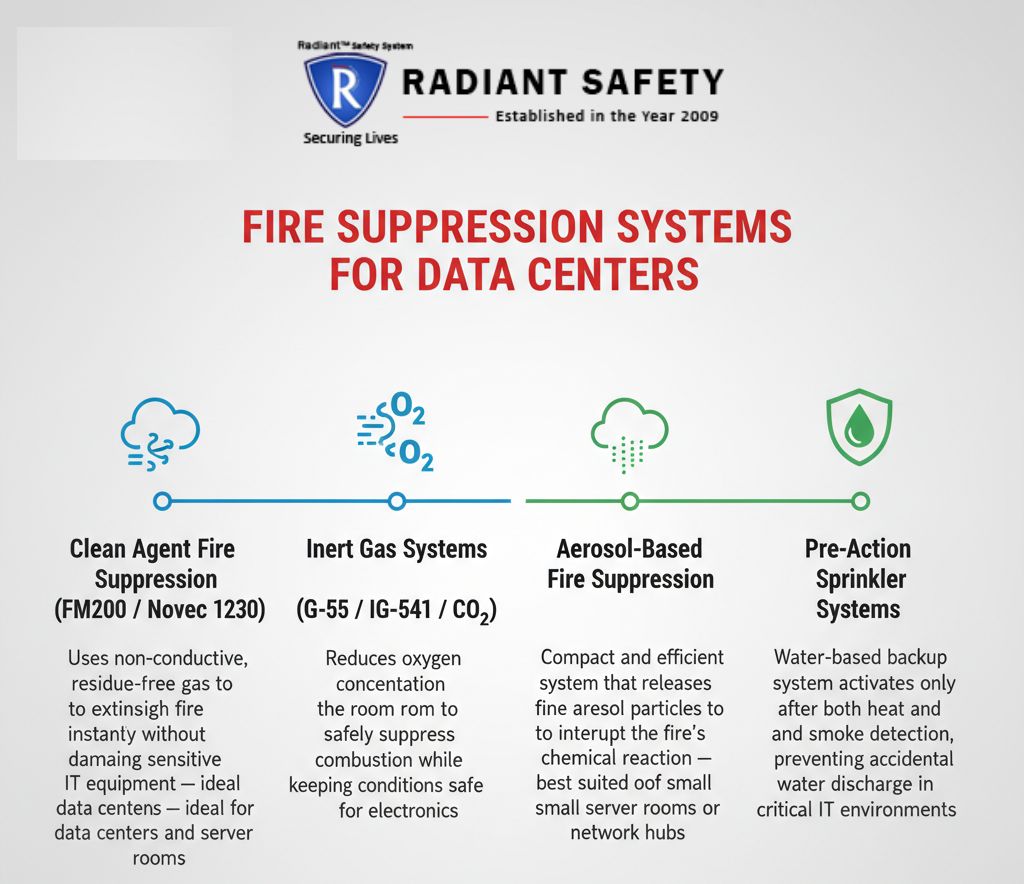
1. Clean Agent Fire Suppression Systems (FM200, Novec 1230)
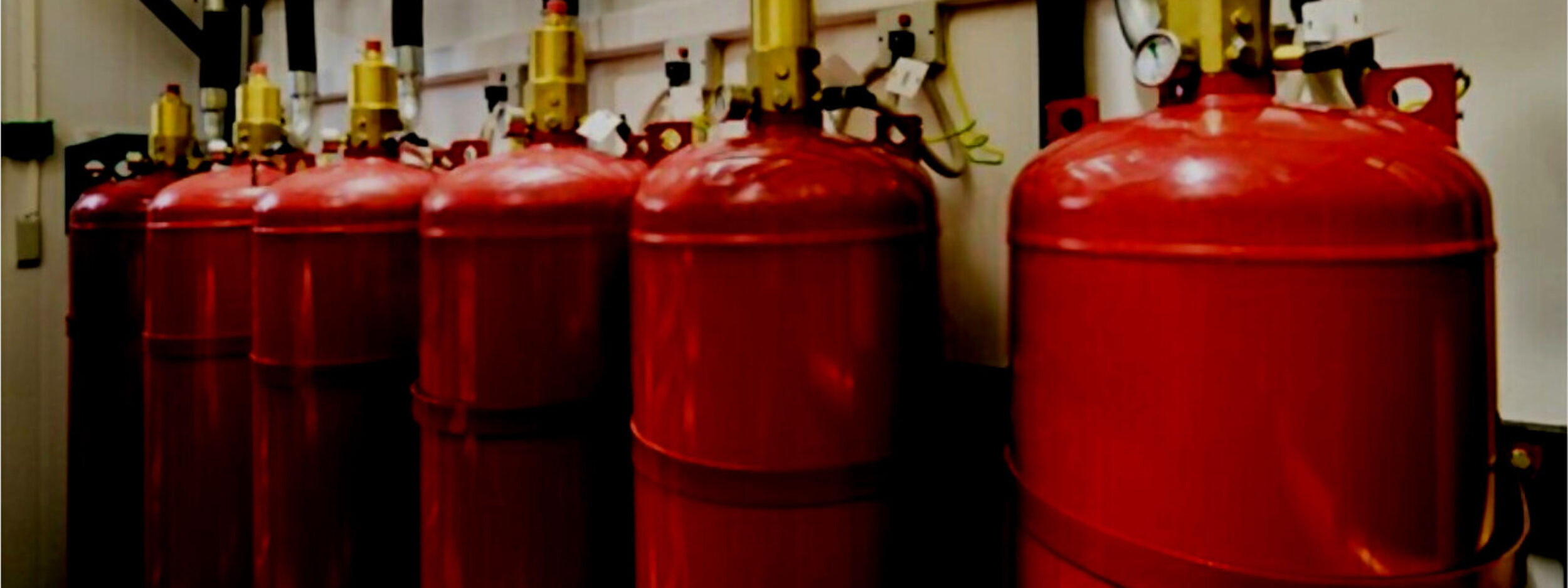
Clean agents are the most recommended solutions for data centers. They extinguish fires quickly without leaving any residue or moisture behind, ensuring your IT equipment remains safe and operational.
- FM200 (HFC-227ea): Fast discharge, eco-friendly, and non-conductive.
- Novec 1230: Advanced clean agent with zero ozone depletion potential and low global warming impact.
2. Inert Gas Systems (IG-55, IG-541, CO₂-based)
Inert gas systems work by reducing the oxygen concentration in the room to a level that can no longer support combustion — but still safe for occupants. These are ideal for large data halls or high-ceiling environments.
3. Aerosol-Based Systems
Compact and cost-effective for smaller server rooms or network hubs. These systems release aerosol particles that disrupt the chemical reaction of fire, stopping it instantly.
4. Pre-Action Sprinkler Systems
For facilities requiring water-based protection as a backup layer, pre-action sprinklers provide dual safety — only activating when both heat and smoke detectors confirm a fire, minimizing false discharges.
Key Design Considerations for Data Center Fire Suppression
Designing a reliable fire suppression system for data centers requires precision, compliance, and understanding of the environment. Here are the most critical factors:
- Early Detection and Response
Install VESDA (Very Early Smoke Detection Apparatus) for early warning, ensuring immediate activation before fire spreads. - Zone Segmentation
Divide the facility into zones — server area, UPS room, battery banks, and cable trays — to enable targeted suppression and avoid unnecessary agent discharge. - Redundancy & System Integration
Link your fire alarm, suppression, and building management systems for seamless communication and automatic response. - Agent Concentration & Room Integrity Testing
Proper agent concentration and room sealing are essential to ensure the clean agent remains effective during discharge. - Compliance with NFPA & BIS Standards
Follow NFPA 2001, IS 15519, and other relevant Indian standards for design, installation, and testing.
Infographic summary (for designers):
- Early smoke detection (VESDA)
- Zone-based design
- Integrated alarm & suppression
- Room integrity testing
- NFPA/BIS compliance
Maintenance & Testing: Keeping Your System Ready 24/7

A fire suppression system is only effective if it works at the right time — and that requires regular inspection and maintenance. Radiant Safety System recommends the following maintenance plan for data center protection:
- Monthly Visual Checks
Inspect control panels, cylinders, and detectors for physical damage or leaks. - Quarterly System Testing
Conduct simulated discharge tests and ensure all alarms and triggers respond correctly. - Annual Room Integrity Test (Door Fan Test)
Essential for clean agent systems — ensures the room can maintain agent concentration for at least 10 minutes. - Cylinder Pressure & Refill Monitoring
Check gas cylinder pressure levels and re-certify them as per manufacturer and NFPA guidelines. - Comprehensive AMC (Annual Maintenance Contract)
Partner with certified professionals like Radiant Safety System to ensure continuous reliability and compliance.
Why Choose Radiant Safety System for Data Center Fire Safety?
Radiant Safety System – Fire Safety Solutions in India
Founded in 2009 by Mr. Sunny Jain, Radiant Safety System has become one of India’s most trusted fire and safety companies. We specialize in fire suppression systems & fire safety solutions, along with advanced fire alarm systems, gas leakage detection, and a complete range of fire protection products.
With ISO 9001:2015 certification, government registration, and MSME verification, our company stands for reliability, compliance, and quality. Over the years, we have delivered end-to-end safety solutions across healthcare, data centers, commercial kitchens, warehouses, residential complexes, and institutional buildings.
From system design and installation to AMC and Fire NOC compliance, our expert team ensures every project meets the highest safety standards.
What Makes Radiant Different?
- Certified Fire Safety Experts with data center experience
- Clean Agent System Installation (FM200, Novec 1230, Inergen)
- End-to-End Execution – design, installation, testing, and maintenance
- Pan-India Service Network (majorly Delhi NCR & North India)
- Quick On-Site Support for inspections and audits
Best Practices for Long-Term Fire Safety in Data Centers

- Keep server rooms clutter-free with proper cable management.
- Regularly calibrate and clean smoke detection devices.
- Train IT staff for emergency response and manual release protocols.
- Maintain temperature and humidity control for stable operations.
- Partner with an experienced AMC provider for ongoing system health checks.
Conclusion: Protect What Powers Your Business
A data center fire can bring operations to a standstill in minutes — but with the right suppression system, you can protect your assets, ensure uptime, and maintain business continuity.
Whether you’re designing a new facility or upgrading an existing one, always choose a partner who understands both technology and safety.
At Radiant Safety System, your protection is our mission. Our certified engineers design, install, and maintain clean agent and inert gas suppression systems that meet the highest global standards.