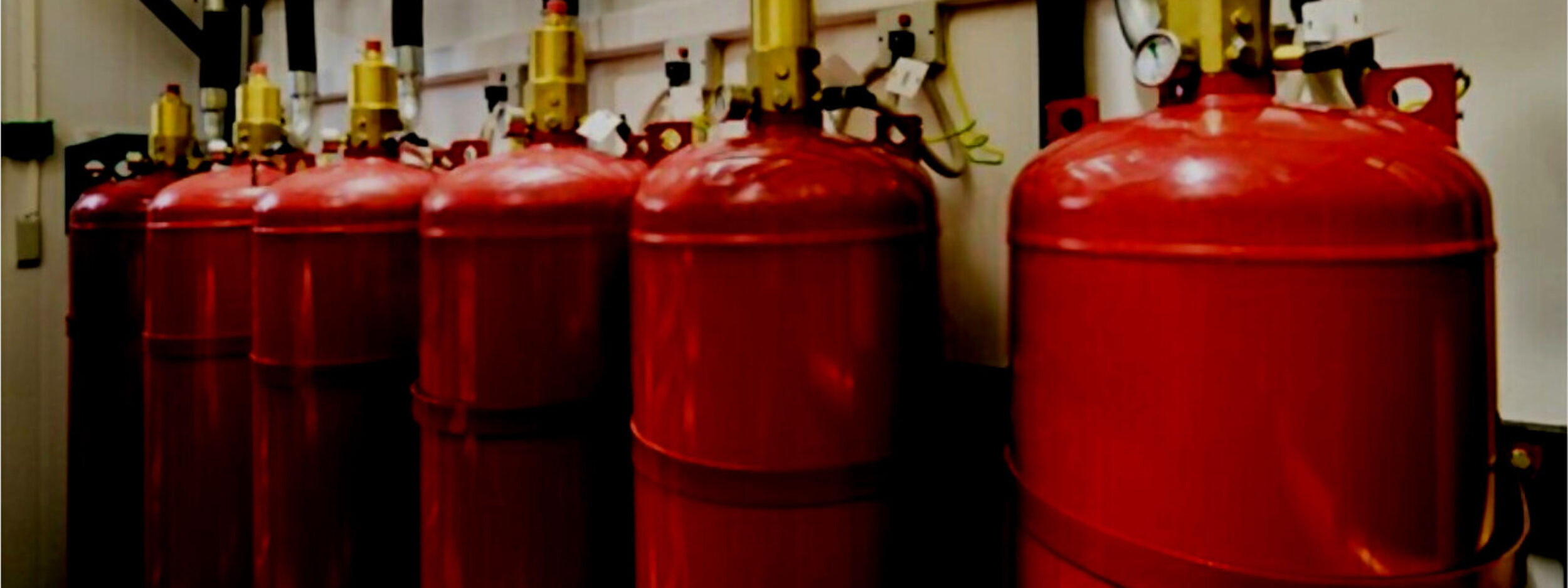

When it comes to protecting lives, property, and business operations, selecting the right fire suppression system is one of the most important decisions any facility can make. A fire can spread within seconds — and by the time manual firefighting starts, the damage is often done. That’s where automatic fire suppression systems play a crucial role.
But how do you choose the right one for your building type — commercial, industrial, or residential? This guide from Radiant Safety System, India’s trusted fire safety partner since 2009, explains everything you need to know before installation.
Why Fire Suppression Systems Matter
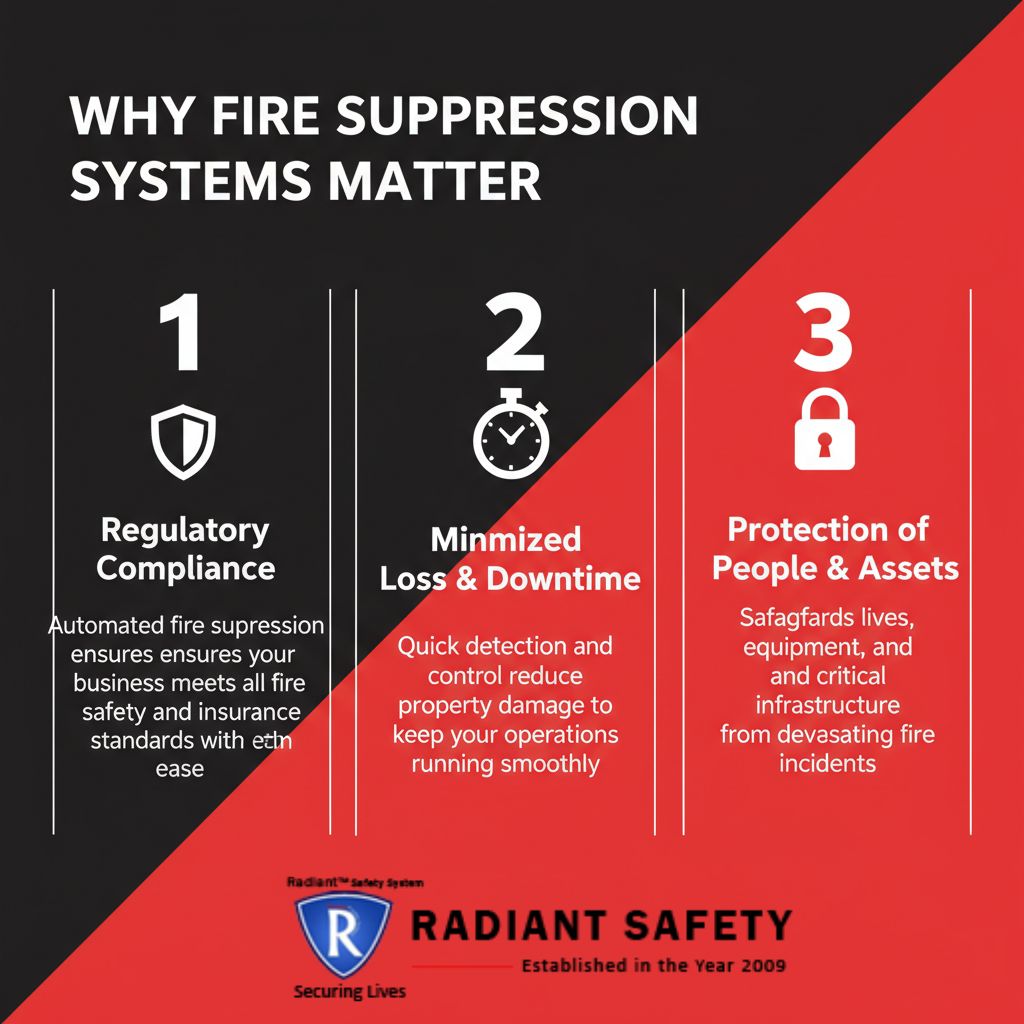
Unlike handheld extinguishers, fire suppression systems are automated — they detect, control, and extinguish fires in seconds. For businesses in IT, manufacturing, healthcare, hospitality, oil & gas, or commercial real estate, a properly designed system helps ensure:
- Compliance with fire safety regulations and insurance norms
- Reduced risk of property loss and operational downtime
- Enhanced safety for people and critical assets
With a reliable system in place, you’re not just meeting compliance — you’re protecting your future.
Key Factors to Consider Before Choosing a Fire Suppression System
1. Nature of Your Facility & Assets
Different environments demand different suppression technologies:
| Facility Type | Recommended System | Why It Works |
|---|---|---|
| Data Centers / Server Rooms | Clean Agent or Inert Gas | Safe for electronics, leaves no residue |
| Industrial Machinery / Manufacturing | Foam-Based or Water Mist | Controls oil and machinery fires quickly |
| Commercial Kitchens | Wet Chemical System | Specially designed for cooking oil fires |
| Vehicles / Transport Hubs | Dry Powder or Foam | Ideal for mobile and fuel-based fires |
💡 Pro Tip: Before shortlisting any system, map out critical risk zones in your facility.
2. Identify Your Fire Risks
Fires are classified into categories based on fuel type — and each requires a specific suppression method:
- Class A: Wood, paper, textiles → Water or Foam systems
- Class B: Flammable liquids → Foam or Dry Chemical
- Class C: Electrical fires → Clean Agent or CO₂ systems
- Class K: Cooking oils → Wet Chemical systems
Choosing a system aligned with your fire class risk ensures maximum efficiency and safety.
3. Safety of Occupants
Not every suppression agent is safe for occupied areas:
- CO₂ Systems: Highly effective but unsafe for people in enclosed spaces.
- Clean Agent Systems (FM200, Novec 1230): Safe for humans and electronics.
- Water Mist Systems: Non-toxic, environmentally friendly, and ideal for public areas.
✅ Always consider human safety and evacuation plans when selecting your system.
4. Compliance & Certification
Your system should comply with both Indian and international safety standards:
- NBC (National Building Code of India)
- NFPA (National Fire Protection Association)
- ISO 9001:2015
- OEM-certified equipment
In India, Fire NOC compliance is mandatory for most commercial and industrial facilities.
Choosing a certified system through a trusted company like Radiant Safety System ensures smooth audits and legal safety.
5. Maintenance & AMC (Annual Maintenance Contract)
Even the best fire suppression system needs regular testing and refilling. Before installation, check for:
- Availability of AMC support
- On-site refilling and testing services
- Spare part accessibility and system uptime
At Radiant Safety Systems, we provide PAN India AMC and refilling services so your system remains operational and compliant year-round.
6. Budget vs Long-Term Value
While initial costs matter, consider the lifecycle cost — including refilling, maintenance, and downtime risk.
Investing in a reliable, certified system from a professional installer often saves money long-term by preventing property damage, downtime, and penalties.
Popular Types of Fire Suppression Systems
| System Type | Ideal For | Key Benefits |
|---|---|---|
| Clean Agent (FM200, Novec 1230) | Data centers, server rooms, control panels | Safe for electronics, residue-free |
| CO₂ System | Industrial equipment, electrical rooms | Cost-effective, rapid action |
| Water Mist System | Hospitals, hotels, public areas | Eco-friendly, safe for people |
| Foam-Based System | Oil & gas, chemical industries | Rapid knockdown, minimal spread |
| Wet Chemical System | Commercial kitchens | Designed for cooking oil and grease fires |
Step-by-Step Process to Choose the Right System
- Conduct a fire risk assessment by certified engineers
- Identify high-value and high-risk zones in your facility
- Evaluate compliance requirements (NBC, NFPA, Fire NOC)
- Match the suppression agent to your risk and occupancy
- Plan installation, testing, and staff training
- Enroll in an AMC for long-term compliance and reliability
Why Choose Radiant Safety Systems?
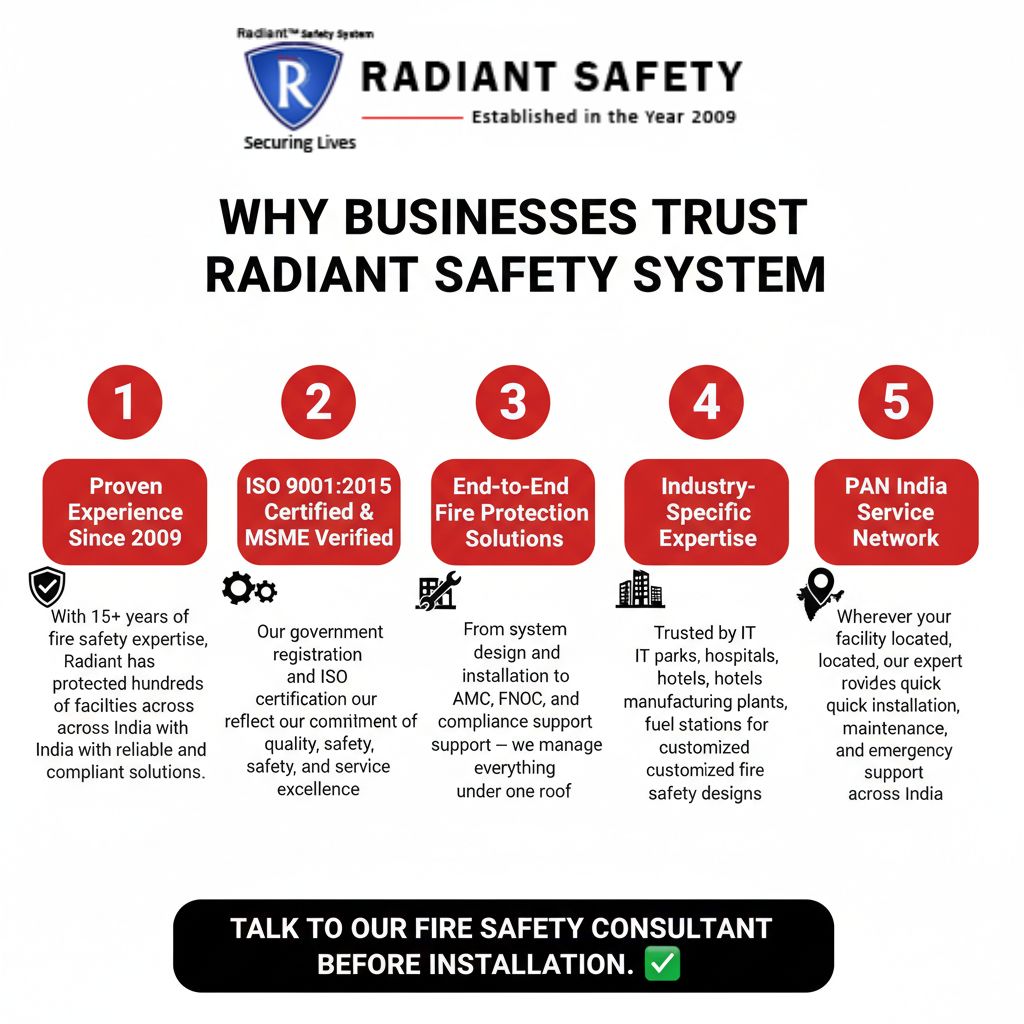
Radiant Safety System, founded in 2009 by Mr. Sunny Jain, is one of India’s most trusted names in fire safety and suppression technology.
We offer:
- 15+ years of proven experience in fire protection design and installation
- ISO 9001:2015 certified, MSME verified, and Govt. registered company
- End-to-end solutions — from design and installation to Fire NOC and AMC support
- Expertise across IT, Oil & Gas, Manufacturing, Healthcare, and Hospitality sectors
- PAN India service network for rapid response and maintenance
👉 Talk to our consultant before installation — our fire experts will help you choose the safest, most cost-effective suppression system for your facility.
Conclusion
Choosing the right fire suppression system isn’t just about compliance — it’s about protecting lives, data, and business continuity.
By evaluating your facility type, fire risk, and safety standards, and working with a trusted partner like Radiant Safety System, you can ensure total peace of mind.